What Is Aggro and Threat in Games: A Complete Guide
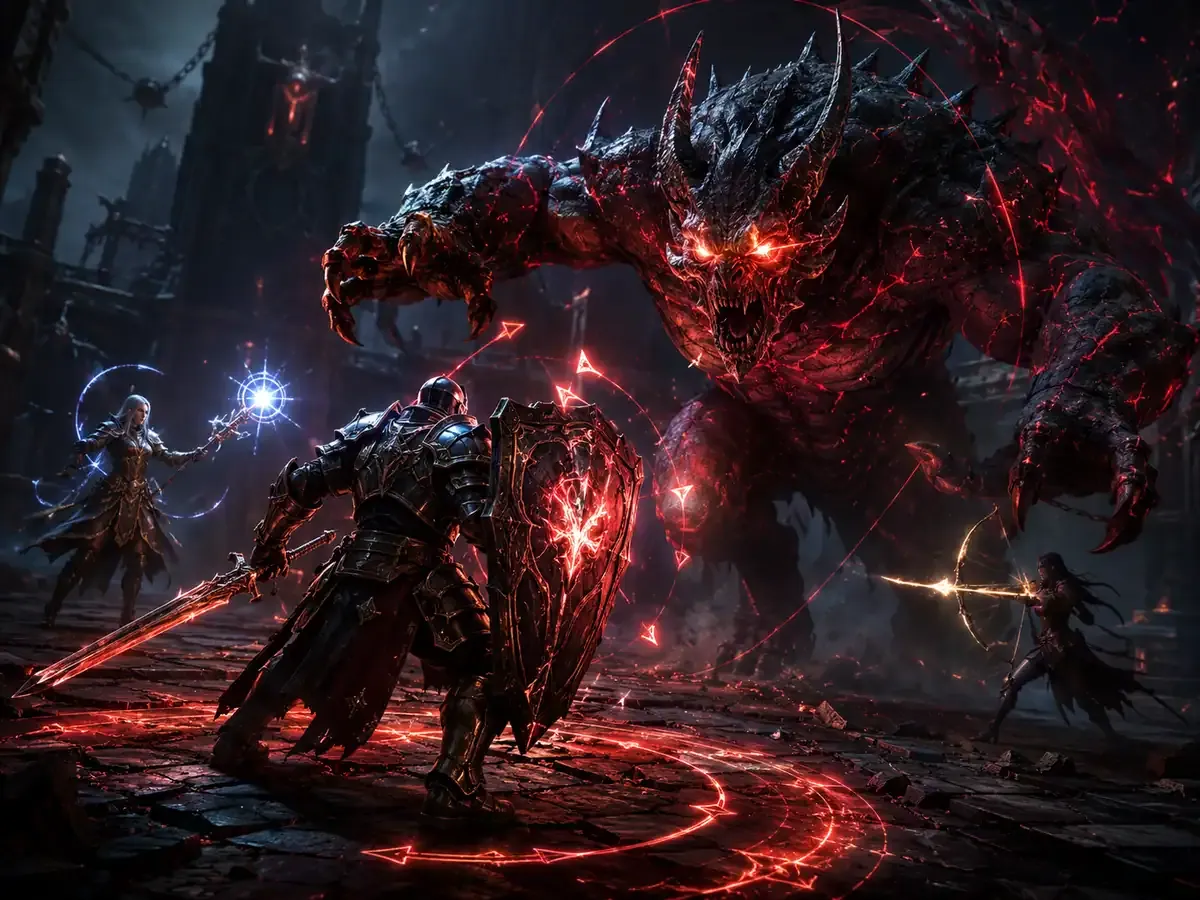
Aggro and threat in games are the systems that decide which player or character an enemy chooses to attack. The word aggro is short for aggression, and threat is the hidden number that drives it. When you fight a monster in a role playing game, the enemy does not pick its target at random. It tracks how much threat each member of your group has generated, then locks on to whoever sits at the top of that list. Understanding aggro and threat is the foundation of group combat in almost every multiplayer role playing game, and it explains why one player tanks the hits while everyone else stays safe behind them.
Once you understand aggro, it becomes easier to choose a team-based RPG or plan a broader gaming library. Compare our co-op games for friends and open-world RPG guide before deciding what to play next.
What Aggro and Threat Actually Mean
Aggro describes the state of an enemy actively focusing on a particular target. When a monster is said to have aggro on you, it means that monster has decided you are the one it wants to hurt, so it walks toward you, faces you, and aims its attacks at your character. Pulling aggro means you have done something to make the enemy switch its attention onto you, and losing aggro means another target has taken its place at the front of the line.
Threat is the underlying mechanic that produces aggro. Most enemies maintain an invisible scoreboard, often called a threat table or hate list, with one entry for every character that has interacted with them in the current fight. Every action you take adds points to your entry on that table. Dealing damage adds threat, healing an ally adds threat, casting certain spells adds threat, and special abilities can add a large burst of it all at once. The enemy simply attacks whoever holds the highest threat value, so the whole dance of group combat is really a quiet contest over who controls that number.
How the Threat Table Works
Picture the threat table as a ranked list that the enemy rebuilds moment to moment. At the start of a fight the table is empty. As soon as someone acts, their name appears with a threat score, and that score climbs as they keep contributing. The enemy continually checks the table and turns to face whoever is on top. If a healer suddenly generates more threat than the current target, the enemy will break off and charge the healer instead.
Different actions are weighted differently. Raw damage usually translates into threat at a steady rate, so a damage dealer who fires off huge numbers can climb the list fast. Healing generates threat too, which surprises new players, because keeping a teammate alive draws the enemy's attention even though you never struck it directly. Tank abilities are designed to multiply the threat from their attacks so they can stay on top without doing the most damage. Many games also feature abilities that wipe threat, reduce it, or transfer it from one player to another, giving groups tools to steer the enemy deliberately. The exact numbers vary between titles, but the core idea is universal across the genre.
Tanking: Controlling Aggro on Purpose
A tank is the player whose job is to hold aggro on purpose so the enemy attacks them instead of the more fragile members of the group. Tanks wear heavy armor and have large health pools and damage reduction, which means they can absorb the punishment that would quickly kill a healer or a damage dealer. By keeping themselves at the top of the threat table, they turn the enemy into a predictable problem that the rest of the group can attack freely from safety.
Good tanking is an active skill, not a passive state. A tank opens a fight by generating a burst of early threat so the enemy commits to them before anyone else can climb the list. They then keep a steady stream of threat generating attacks flowing to stay comfortably ahead. When multiple enemies are involved, a skilled tank gathers them all and holds the attention of the whole pack at once, which is far harder than holding a single target. The difference between a calm, controlled fight and a chaotic scramble usually comes down to how well the tank manages threat.
Taunt: The Aggro Reset Button
The taunt is the single most important tool for managing aggro, and almost every tank has one. A taunt is an ability that forces an enemy to attack the caster for a short period regardless of the threat table, and in most games it also sets the caster's threat to match or exceed whoever was previously on top. In practice this means a tank can instantly rip an enemy off a teammate who accidentally pulled aggro, then re-establish control.
Because the taunt is so powerful, it usually comes with limits. Taunts often have cooldowns, so a tank cannot spam them endlessly, which forces real threat management between uses. Some tougher enemies in raids resist taunts or become immune after being taunted too often, so the group cannot rely on the button alone. Learning when to hold a taunt in reserve for an emergency, rather than burning it the moment threat slips, is one of the marks of an experienced tank. The taunt is a safety net, not a substitute for steady threat generation.
Pulling: Starting the Fight on Your Terms
Pulling is the act of deliberately drawing an enemy or group of enemies into combat, usually by attacking from range or stepping into their detection radius. A clean pull lets the group decide exactly when and where a fight begins, which is a huge advantage. The tank typically pulls so that they generate the first threat and the enemy comes to them, while the rest of the group waits until the tank has firm control before adding their own damage.
Smart pulling avoids waking up more enemies than the group can handle. Many areas are full of patrolling monsters and tightly packed groups, and a careless pull can drag several packs together into one overwhelming fight, an event often called a chain pull or a wipe waiting to happen. Players use line of sight, careful positioning, and ranged attacks to separate a single group from the crowd. The opening seconds after a pull are the most fragile moment of any encounter, because threat is still being established and the wrong move can send the enemy straight at a healer.
Managing and Dropping Aggro
Damage dealers and healers have to manage threat just as carefully as tanks, only from the opposite direction. Their goal is to do their job effectively without climbing above the tank on the threat table and pulling aggro onto themselves. The classic rule is to wait a few seconds at the start of a fight so the tank can build a lead before unloading full damage, then watch the pace so you stay just below the tank's threat ceiling.
When a fragile player does pull aggro, dropping it quickly becomes vital. Many classes have abilities that reduce their threat or hand it off to the tank, sometimes called a threat dump or a feign death. Stopping all actions for a moment, moving toward the tank so the enemy passes through their threat zone, or using a defensive ability to survive until the tank taunts are all standard responses. Healers face a special challenge because they generate threat across every enemy they heal near, so they often rely on the tank to gather threat broadly and on their own threat reducing tools to stay alive.
How Enemy AI Picks Targets Beyond Threat
Not every enemy obeys a simple threat table, and modern games layer extra rules on top to keep fights interesting. Some bosses periodically ignore threat entirely and target a random player, the player furthest away, or the player with the lowest health, forcing the group to react rather than rely on the tank holding everything. Others fixate on whoever is using a specific ability, or switch targets on a timer to spread danger around the group.
These special targeting rules are usually called fixates, and they exist to test more than raw threat management. A boss that charges the player standing farthest away rewards good positioning, while one that hunts the lowest health target rewards quick healing and damage avoidance. In single player role playing games, enemy artificial intelligence may use simpler logic, preferring the nearest target, the one dealing the most damage, or a scripted priority. Recognizing what governs a particular enemy's choices is half the battle, because once you know the rule you can plan around it instead of being surprised by it.
Why Understanding Aggro Makes You a Better Player
Aggro and threat are easy to overlook when you first start playing in groups, but they quietly shape almost every encounter. A group that understands threat moves like a single unit, with the tank controlling the enemy, the damage dealers maximizing output without stealing aggro, and the healers keeping everyone standing while watching their own threat. A group that ignores it descends into chaos, with enemies chasing healers, fragile players dying early, and fights dragging on far longer than they should.
The beauty of the system is that it rewards awareness over reflexes. You do not need lightning reactions to manage threat well, you need to understand the rules and pay attention to what the enemy is doing. Watch which target an enemy is facing, learn the threat weight of your abilities, and respect the rhythm of letting the tank build a lead before committing. Master these habits and you will become the kind of teammate every group wants, the one who never accidentally pulls the boss onto the healer at the worst possible moment.
FAQ
What is the difference between aggro and threat?
Threat is the hidden number on an enemy's internal scoreboard, while aggro is the visible result of that number. Each action you take adds threat points, and the enemy attacks whoever has the most threat. Having aggro simply means you currently sit at the top of the threat table and are the one being attacked.
Why does healing generate aggro if I never attack the enemy?
Most games treat healing as a threat generating action because keeping your group alive prolongs the fight and works against the enemy. The healing is usually spread as threat across every nearby enemy, which is why healers can suddenly pull aggro even though they never dealt direct damage. Healers manage this by relying on the tank and on their own threat reducing abilities.
What does it mean to pull aggro?
Pulling aggro means you have generated enough threat to become the enemy's new target, so it breaks off and attacks you. This is good when a tank does it on purpose, but dangerous when a fragile damage dealer or healer does it by accident. The usual fix is for the tank to taunt the enemy back or for the player to drop their threat.
How does a taunt work?
A taunt forces an enemy to attack the caster for a short time no matter what the threat table says, and it usually raises the caster's threat to the top as well. Tanks use it to instantly reclaim an enemy that switched to a teammate. Taunts normally have cooldowns and some bosses can resist them, so they are used carefully rather than constantly.
Do single player RPGs use aggro and threat?
Single player role playing games often use simpler enemy logic, since there is usually only one player to attack. With pets, summons, or companions in the fight, though, many of these games do track a basic threat value to decide whether the enemy targets you or your companion. The core idea of generating attention through your actions still applies.
How do I stop accidentally pulling aggro as a damage dealer?
Wait a few seconds at the start of a fight so the tank can build a threat lead before you unload full damage, then keep an eye on the pace so you stay just below the tank. Use any threat reducing ability your class has when you climb too high, and stop attacking briefly if you do pull aggro until the tank takes the enemy back.
Can a tank hold aggro on many enemies at once?
Yes, and it is one of the hardest parts of tanking. A tank gathers a group of enemies and uses area abilities that generate threat against all of them at the same time. Holding a whole pack is much harder than holding one target, so damage dealers often wait longer before attacking so the tank can secure threat on every enemy first.
Digidang Team
Gaming enthusiast and marketplace expert sharing tips, guides, and the best gaming deals.